|
| Paris Home | Sightseeing |
| Where to Stay | Transportation |
|
Money Tips for ParisATMs, currency exchange, and credit cards
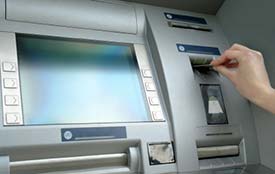
ABOVE: Most Parisian cashpoints have menus in at least four languages, including English.
The euroFrance belongs to the euro zone. (Its old currency, the franc--or, more accurately, the "new franc"--was retired in 2002.) Please don't embarrass yourself and annoy the locals by trying to pay or tip in dollars, pounds sterling, or another foreign currency. Getting money from ATMs or cashpointsYour best source of cash is an automated teller machine (ATM) or cashpoint. You'll find ATMs on banks and post offices all over Paris, and most of them have step-by-step instructions in your choice of French, English, and other languages. Here's our advice on using ATMs:
Currency exchangeATMs nearly always have better rates than currency-exchange offices and hotel reception desks. (Not long ago, a Travelex office in Europe was charging an 8.5 percent commission on U.S. dollar notes, plus a €3,50 handling fee. The rate at the bank in Amsterdam's Schiphol Airport wasn't much better.) If you insist on exchanging cash or traveler's checks, try to limit the amount, because changing money back into your own currency at the end of your will mean yet another exchange commission. Using credit cardsVisa and MasterCard are accepted by most shops and restaurants, though smaller merchants, some neighborhood restaurants or bars, and street vendors may not take credit cards. (Also, restaurant tips are normally given in cash.) American Express is accepted at higher-end boutiques and restaurants that cater to tourists. Warnings:
For more advice on cash, credit cards, VAT refunds on shopping purchases, and other money-related topics, read these articles from Europeforvisitors.com:
About the author:
After 4-1/2 years of covering European travel topics for About.com, Durant and Cheryl Imboden co-founded Europe for Visitors (including Paris for Visitors) in 2001. The site has earned "Best of the Web" honors from Forbes and The Washington Post. For more information, see About our site, press clippings, and reader testimonials. Top photo copyright © Roman
Milert. |
|
|
|


 Durant Imboden