Europe > Paris
> Tourist Mistakes > #9
Top 11 Tourist Mistakes in Paris
(and how to
avoid them)
Continued from previous page
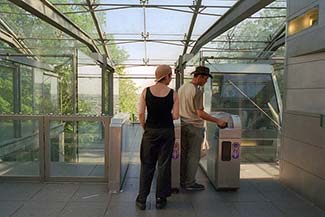
ABOVE: The
Montmartre Funicular may be
fun when it isn't crowded, but if you're reasonably fit, you can save the price
of a ticket by climbing the 36-meter or 118-foot stairway to Sacré-Coeur.
Mistake #9: Overspending on local transport
Paris is more walkable than many tourists realize: When we
stay in Montmartre, it takes us only about 40 minutes to reach the Seine on
foot, despite having to walk nearly halfway across the city from north to south.
 In
the heart of Paris, distances are even shorter. For example, the entire length
of the Champs-Élysées is only 1.9 km or 1.2 miles, and the distance between two of
the city's top tourist attractions--Notre Dame Cathedral and the Louvre
Museum--is considerably less than that. The trek from Notre Dame to the Eiffel
Tower is longer (about 2.5 km, or 1.6 miles), but it's an easy stroll along the
Seine unless you have mobility problems or the weather is awful. In
the heart of Paris, distances are even shorter. For example, the entire length
of the Champs-Élysées is only 1.9 km or 1.2 miles, and the distance between two of
the city's top tourist attractions--Notre Dame Cathedral and the Louvre
Museum--is considerably less than that. The trek from Notre Dame to the Eiffel
Tower is longer (about 2.5 km, or 1.6 miles), but it's an easy stroll along the
Seine unless you have mobility problems or the weather is awful.
The most practical alternatives to walking--the
Métro,
RER trains, and
public buses--aren't without their
disadvantages:
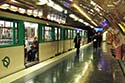 Métro
trains run everywhere (no place in Paris is more than 500m from a
station), but there's no logical order to the lines. Getting from Point A to
Point B often requires a train change, even if you're going a relatively short
distance. Unless you're traveling a long way or making a simple journey (along
Line 1, for example, which mostly parallels the Seine), it may be faster and
easier to walk. Métro
trains run everywhere (no place in Paris is more than 500m from a
station), but there's no logical order to the lines. Getting from Point A to
Point B often requires a train change, even if you're going a relatively short
distance. Unless you're traveling a long way or making a simple journey (along
Line 1, for example, which mostly parallels the Seine), it may be faster and
easier to walk.
 RER
trains are quick, and the RER network map is
easy to figure out. However, trains run less frequently than Métro
trains do, and connections between RER and Métro lines sometimes require long,
time-consuming walks underground. RER
trains are quick, and the RER network map is
easy to figure out. However, trains run less frequently than Métro
trains do, and connections between RER and Métro lines sometimes require long,
time-consuming walks underground.
 Public
buses crisscross the city, but unless you know your landmarks, it can
be difficult to know when to get off--especially if the bus is crowded and you
have a poor view of your surroundings. Public
buses crisscross the city, but unless you know your landmarks, it can
be difficult to know when to get off--especially if the bus is crowded and you
have a poor view of your surroundings.
Our advice:
-
If you do plan to use public transportation extensively, the
Paris Visite travel card may be worth considering. It's valid for 1, 2,
3, or 5 days, and it covers public transportation in zones 1-3 or all zones,
depending on which version you buy. (Zones 1-3 cover the city and its
immediate outskirts; zones 4-5 include CDG Airport and suburban destinations
such as Disneyland Paris, Versailles, and Fontainebleau.
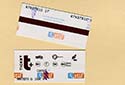 But do your math first: Unless you travel many times a day
by public transportation, it may be cheaper to buy a carnet or
stack of 10 single transit tickets at any Métro station.
(See our Paris Métro
Tickets page for more information.) But do your math first: Unless you travel many times a day
by public transportation, it may be cheaper to buy a carnet or
stack of 10 single transit tickets at any Métro station.
(See our Paris Métro
Tickets page for more information.)
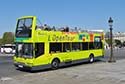 Another
transportation option is the "hop on, hop
off" sightseeing bus. Two companies,
L'Opentour and
Big Bus Tours,
operate these
double-deck buses, with slightly different routes. Fares aren't cheap, but if
you're traveling mostly between popular tourist spots and don't like walking, a
one- or two-day sightseeing-bus pass will be less expensive than hiring
taxis. Another
transportation option is the "hop on, hop
off" sightseeing bus. Two companies,
L'Opentour and
Big Bus Tours,
operate these
double-deck buses, with slightly different routes. Fares aren't cheap, but if
you're traveling mostly between popular tourist spots and don't like walking, a
one- or two-day sightseeing-bus pass will be less expensive than hiring
taxis.
 See
our Paris Sightseeing Buses
article for information on these two companies plus the
Batobus, a water
bus that connects museums and tourist attractions along the Seine. See
our Paris Sightseeing Buses
article for information on these two companies plus the
Batobus, a water
bus that connects museums and tourist attractions along the Seine.
Next page:
Mistake #10: Being easy prey for
pickpockets and purse-snatchers
About the author:
 Durant Imboden
is a professional travel writer, book author, and editor who focuses on European
cities and transportation. Durant Imboden
is a professional travel writer, book author, and editor who focuses on European
cities and transportation.
After 4-1/2 years of covering European travel topics for About.com, Durant and
Cheryl Imboden co-founded Europe for Visitors (including Paris for Visitors) in
2001. The
site has earned "Best of the Web" honors from Forbes and The
Washington Post.
For more information, see
About
our site,
press clippings, and
reader
testimonials.
Top photo copyright © Paris Tourist Office.
Photographer: Amélie Dupont.
1st inset photo copyright © Majej Pribelsky.
4th inset photo copyright © Patrick Breig.
| 
 Save
on car rental with short-term leasing
Save
on car rental with short-term leasing