| Home | Main Menu |
 Save
on car rental with short-term leasing
Save
on car rental with short-term leasing
Save
on car rental with short-term leasing
|
Eisriesenwelt Ice CavesThe world's largest ice caves are in Werfen, Austria, a short trip from Salzburg by car or train.
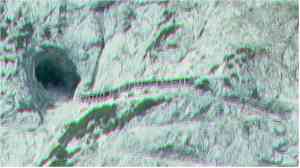
ABOVE: An approach path leads to the "World of the Ice Giants."
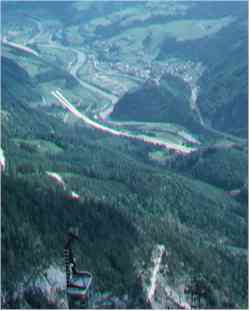
When Salzburg's weather turns sultry and the streets are crowded with perspiring tourists, it's time to head 40 km (25 miles) south to Werfen, Austria. There, on a mountainside overlooking the Salzach River Valley, you'll find a respite from summer heat in the Eisriesenwelt or "World of the Ice Giants." The Eisriesenwelt is a vast underground series of caves with some 42 km (26 miles) of tunnels and chambers. The caverns near the entrance are lined with ice that reaches a thickness of 20 meters (65 feet). Smooth walls, stalactites, stalagmites, domes, frozen waterfalls, and other ice formations have shaped a crystalline world that deserves a 5-star rating on any list of natural tourist attractions. Breathe in, breathe out.The ice in the caves results from the inflow and outflow of air. In the winter, cold air blows into the caves, freezing the water from melting snow that has dripped into the cave during the warmer months. In summer, a cold breeze flows toward the entrance from deep within the caverns and prevents the ice from melting. The caves were officially discovered in 1879 by Anton Posselt, but they were ignored by most scientists and the public until Alexander von M�rk--a noted speleologist of the Salzburg region--explored the caverns in 1912. Von M�rk died in World War I, and his ashes were later interred in the M�rk-Dom, or "M�rk's Cathedral," a chamber of ice that rises 35m (115 ft) above the cave floor. Bundle up and take a tour!The Eisriesenwelt caves are open to tourists from May 1 until late October. Guided 75-minute tours run frequently (as often as every six minutes during peak season). Tours operate from about 8:30 a.m., when the first cable car of the day arrives, until late afternoon. See the official Web site's general information page for details. When you enter the caves, the guide will hand you a "cave lamp" at the entrance. Several times during the tour, the guide will disappear behind an ice sculpture or formation and set off a magnesium flare. The effect of the intense bluish-white light is stunning, and it throws every detail of the ice into sharp relief. A few points worth noting:
How to reach the Eisriesenwelt:By car. On the A10 motorway, drive about 40 km (25 mi) south from Salzburg to Werfen, then follow the signs for Eisriesenwelt. The parking lot is about 5 km (3 mi) northeast of the town. By train. Buy a ticket for Werfen. From the Werfen train station, you can catch a bus or van to the Eisriesenwelt parking lot. Once you've reached the parking lot, you'll walk about 15 minutes to the Wimmer H�tte, where you'll find the lower station of an aerial cable railway. A 15-passenger gondola will whisk you up the mountain face to the Dr.-Oedl Haus, a pleasantly old-fashioned Gasthaus where you can get a drink, a snack, a meal, or a simple room for the night. From the Dr-Oedl Haus, it's another 15-minute walk to the cave entrance. Although the cave tour itself lasts only 75 minutes, you should allow three to five hours for the complete trip from Werfen. What it'll cost you:When we last checked, a combined roundtrip cablecar/cave ticket was priced at �35 for adults, €25 for teens from 15 to 18, and €17 for children of 5 to 14. You'll get a discount if you pre-order your tickets online. To double-check admission fees, see the official Web site (link below). Related Web sites:Eisriesenwelt
Werfen
Burg
Hohenwerfen |
|
|
| Europe for Visitors - Home | | About us | | Press clippings | | Testimonials | Disclosure: Where hotel or other reservation links point to third-party booking sites, we may receive a small commission on transactions. This will not affect the rate you pay. Copyright © 1996-2026 Durant and Cheryl Imboden. All rights reserved. |