|
Europe
>
Portugal > Porto
> Sightseeing
Porto, Portugal
Page 3
Continued from page 2
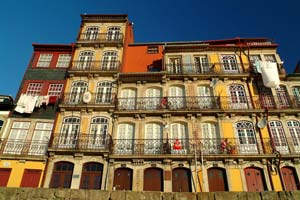
ABOVE: A building in Ribeira, Porto's
riverside quarter.
Sightseeing and excursions
In the city:
 The
historic center of Porto is compact, and you can easily visit the major sights
on foot. You might want to begin your walking tour at the main
Tourist Office on the
Rua Clube dos Fenianos, on the west side of the city hall, where
you can pick up maps and brochures. Head downhill to the
Praça da Liberdade and
the São Bento railroad station, which opened in 1910 and has huge murals
of azulejo tile in the main lobby. (If you need to use the toilets,
they're just beyond the entrance to the train platforms.) The
historic center of Porto is compact, and you can easily visit the major sights
on foot. You might want to begin your walking tour at the main
Tourist Office on the
Rua Clube dos Fenianos, on the west side of the city hall, where
you can pick up maps and brochures. Head downhill to the
Praça da Liberdade and
the São Bento railroad station, which opened in 1910 and has huge murals
of azulejo tile in the main lobby. (If you need to use the toilets,
they're just beyond the entrance to the train platforms.)
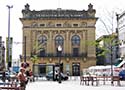 Nearby
is the Teatro Nacional San João, which is
worth a glance as you head for the Church of Santa Clara
with its gilded
interior of carved wood. Nearby
is the Teatro Nacional San João, which is
worth a glance as you head for the Church of Santa Clara
with its gilded
interior of carved wood.
Continue west, and you'll run into the
Sé,
or Cathedral, which has a Gothic cloister and a viewing terrace that are worth
seeing after you've made the obligatory tour of the sanctuary with its silver
altar. If you still have an appetite for churches, walk toward the Douro and the
Igreja de San Francisco, which is famous for its polychromed and gilded
"Tree of Jesse" woodcarving.
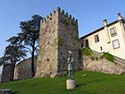 There's
plenty more to see in central Porto, but don't limit yourself to a
guidebook-imposed walking tour: Allow time to wander around, visit the shops,
and sample a café or two. Finally, when you're ready for a change of pace, walk
across the Ponte de Dom Luis I to the Douro's south bank. There's
plenty more to see in central Porto, but don't limit yourself to a
guidebook-imposed walking tour: Allow time to wander around, visit the shops,
and sample a café or two. Finally, when you're ready for a change of pace, walk
across the Ponte de Dom Luis I to the Douro's south bank.
In Vila Nova da Gaia:
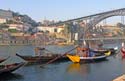 The
south side of the Douro is lined with a riverfront park, and traditional
port-wine boats are anchored just offshore. Behind the waterfront are port
lodges (see 0ur Cálem
article) where you can learn how port wine is made, taste the finished product,
and--if you wish--purchase a bottle or two for the road. The
south side of the Douro is lined with a riverfront park, and traditional
port-wine boats are anchored just offshore. Behind the waterfront are port
lodges (see 0ur Cálem
article) where you can learn how port wine is made, taste the finished product,
and--if you wish--purchase a bottle or two for the road.
Along the seashore:
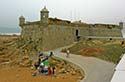 If
you can spare the time, head out the Avenida da Boavista to the
Forte de São
Francisco Xavier, more popularly known as the Castelo do Queijo ("Castle
of Cheese"), where pensioners play cards at the base of the fortress walls while
Atlantic breakers kick up spray on the rocks. Then take the bus or walk along
the coastal avenues to the Castelo de São João da Foz and Portugal's
oldest lighthouse at the mouth of the Douro. (In summer, locals flock to the
beaches between the two forts.) If
you can spare the time, head out the Avenida da Boavista to the
Forte de São
Francisco Xavier, more popularly known as the Castelo do Queijo ("Castle
of Cheese"), where pensioners play cards at the base of the fortress walls while
Atlantic breakers kick up spray on the rocks. Then take the bus or walk along
the coastal avenues to the Castelo de São João da Foz and Portugal's
oldest lighthouse at the mouth of the Douro. (In summer, locals flock to the
beaches between the two forts.)
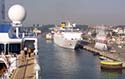 Another
option is to take the
Metro to
or from the harbor suburb of Matosinhos, north of the Castelo do
Queijo, which is known for its seafood restaurants. (During the season, you're
likely to see cruise ships tied up at the quays just west of the Metro station.) Another
option is to take the
Metro to
or from the harbor suburb of Matosinhos, north of the Castelo do
Queijo, which is known for its seafood restaurants. (During the season, you're
likely to see cruise ships tied up at the quays just west of the Metro station.)
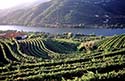
In the region:
 Porto is the gateway to the
Douro Valley wine district, which
you can easily reach by car, by the railroad that follows the river, or by
excursion boat. For example, you could take an
excursion boat to
Pinhão,
the town closest to the leading quintas or wine estates such as the
Quinta Nova de Sonna Senhora do Carmo,
then spend the night at a hotel such as the
Vintage House and return to
Porto by train the next day. Porto is the gateway to the
Douro Valley wine district, which
you can easily reach by car, by the railroad that follows the river, or by
excursion boat. For example, you could take an
excursion boat to
Pinhão,
the town closest to the leading quintas or wine estates such as the
Quinta Nova de Sonna Senhora do Carmo,
then spend the night at a hotel such as the
Vintage House and return to
Porto by train the next day.
 Many
other interesting towns in Northern Portugal are within an hour or two of Porto.
For more information on the region and how to get around it, browse the itineraries at
VisitPortugal.com and consult the
Portuguese Railways (CP)
timetables. Many
other interesting towns in Northern Portugal are within an hour or two of Porto.
For more information on the region and how to get around it, browse the itineraries at
VisitPortugal.com and consult the
Portuguese Railways (CP)
timetables.
Escorted tours:
 Viator, our sightseeing-tour partner, offers guided all-day tours
to the Douro wine region and the pilgrimage city of
Santiago de Compostela,
Spain. See Viator's Porto
Tours and Excursions for prices in the currency of your choice. Viator, our sightseeing-tour partner, offers guided all-day tours
to the Douro wine region and the pilgrimage city of
Santiago de Compostela,
Spain. See Viator's Porto
Tours and Excursions for prices in the currency of your choice.
Alternatively, you can book tours locally when you're in Porto,
which is a good idea if you're on a leisurely schedule and don't need to plan
ahead.
Next page:
Museums and culture
Top photo copyright © Valdemir Cunha.
São Bento photo copyright © Porto & Northern
Portugal Tourism.
Vineyards w!ith Douro River photo copyright © Paco Elvira.
| 
 Save
on car rental with short-term leasing
Save
on car rental with short-term leasing