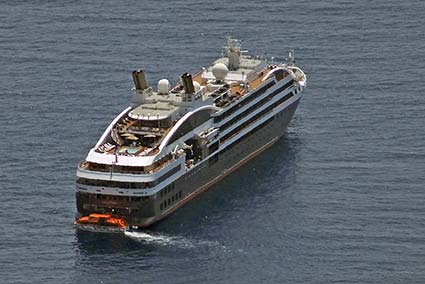
European cruises fall into four categories:
Sea cruises
 Dozens
of ships offer cruising in the Mediterranean, the Baltic, the North Sea, and
other coastal regions of Europe. These vessels are similar in concept to the
transatlantic ocean liners of yesteryear, and they carry anywhere from 100 to
3,000 or more passengers in cabins and suites. Most newer ships offer private
balconies, and nearly all have amenities such as swimming pools and nightly
entertainment.
Dozens
of ships offer cruising in the Mediterranean, the Baltic, the North Sea, and
other coastal regions of Europe. These vessels are similar in concept to the
transatlantic ocean liners of yesteryear, and they carry anywhere from 100 to
3,000 or more passengers in cabins and suites. Most newer ships offer private
balconies, and nearly all have amenities such as swimming pools and nightly
entertainment.
River cruises
 On
the Rhine, the Danube, and other great rivers of Europe, luxurious cruise boats
glide past the local scenery and stop often to allow sightseeing on shore. These
boats are low in profile, to fit under bridges, and they typically carry 50 to
200 passengers.
On
the Rhine, the Danube, and other great rivers of Europe, luxurious cruise boats
glide past the local scenery and stop often to allow sightseeing on shore. These
boats are low in profile, to fit under bridges, and they typically carry 50 to
200 passengers.
Barge cruises
 From
the 1800s through the mid-20th Century, small barges hauled freight over a vast
network of canals and secondary rivers in Europe. Today, many of those barges
have been converted into luxury cruise vessels. Because the typical "hotel
barge" carries only 6 to 12 guests, barge cruising is more intimate than a ship
or a riverboat. It's also slower-paced, with daytime stops and overnight mooring
at small villages.
From
the 1800s through the mid-20th Century, small barges hauled freight over a vast
network of canals and secondary rivers in Europe. Today, many of those barges
have been converted into luxury cruise vessels. Because the typical "hotel
barge" carries only 6 to 12 guests, barge cruising is more intimate than a ship
or a riverboat. It's also slower-paced, with daytime stops and overnight mooring
at small villages.
Yacht cruises
A few companies, such as
Peter Sommer Travels, offer cruises aboard sailing yachts in the
Mediterranean and Aegean. These "soft adventure" cruises appeal to sailors and
aspiring sailboat owners.
Because most first-time cruisers prefer ocean and river ships,
mainstream cruising--especially "port-intensive" cruising--is the focus of this
article.

 Save
on car rental with short-term leasing
Save
on car rental with short-term leasing