
| Cruise Lines | Cruise Reviews |
|
Alghero, SardiniaFrom: Wind Surf Cruise Review
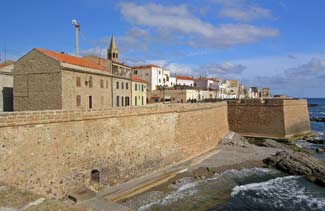
ABOVE: A pedestrian promenade runs along the walls and fortifications that protect Alghero's Old Town.
The house of Aragon captured the city in 1354 and made it a colony; Catalan (the language spoken in Barcelona and northeastern Spain) became the official language. Even today, many of the locals speak a dialect of Catalan and street signs are inscribed in two langages--Itallian and Catalan--sometimes with entirely different meanings. (This can be confusing to the many tourists who visit Alghero from spring through fall.) Wind Surf anchored just beyond Alghero's breakwater at 7:30 a.m. and remained until 11 at night. I signed up for the "Discover Alghero" tour, which offered a chance to visit scenic highlights in the countryside followed by a walking tour of the Old Town.
The Old Town's buildings extend right up to and above the walls, so that you can sit at a cafe table, order a pizza, buy a gelato, etc. without having to leave the promenade. You can even climb down to the rocks below the walls for an afternoon of fishing. The Old Town itself was compact and attractive, with narrow medieval streets and several churches of interest. Here and there, the irregular grid was broken up by little piazzas where the locals were hanging out.
The Old Town is filled with shops, mostly selling the local coral jewelry or dishing up scoops of gelato. Pecorino cheese, a liqueur called Mirto, and wines are other popular items with tourists; Wind Surf's excursion manager recommended a food and wine shop in the Piazza Civica called "Il Ghiotto."
I didn't visit the beach, but Alghero does have a long stretch of well-maintained sand beaches north of the Old Town and the marina. Hotels line the beaches in many places, and--according to the Wind Surf's shorex manager--some have been converted from villas once owned by Central Europeans who came to Sardinia after World War I. Next page: Trapani, Sicily
|
|
|
| Europe for Visitors - Home | | Contact information, disclosures, audience | Copyright © 1996-2024 Durant and Cheryl Imboden. All rights reserved. |

 The
4-1/2-hour tour began with a bus ride to the
The
4-1/2-hour tour began with a bus ride to the 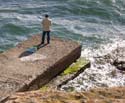 Later,
I wandered around the Old Town and the bastioni, or city walls, on my
own. The walls are remarkably well-preserved in most places, and in the late
afternoon the broad promenade atop the bastioni was busy with young
couples, children at play, clusters of old men, and the occasional tourist.
Later,
I wandered around the Old Town and the bastioni, or city walls, on my
own. The walls are remarkably well-preserved in most places, and in the late
afternoon the broad promenade atop the bastioni was busy with young
couples, children at play, clusters of old men, and the occasional tourist.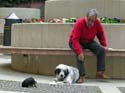 Dogs
were everywhere: big Alsatians, little Dachshunds, and everything in between.
All had collars and looked well-fed; most were accompanied by their masters,
while a few belonged to the friendly owners of nearby shops.
Dogs
were everywhere: big Alsatians, little Dachshunds, and everything in between.
All had collars and looked well-fed; most were accompanied by their masters,
while a few belonged to the friendly owners of nearby shops.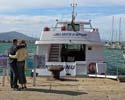 Back
at the waterfront, I strolled past the extensive yacht marina, which was mostly
filled with large sailboats. If I'd been in the mood for a boat trip, I could
have taken an excursion boat to the
Back
at the waterfront, I strolled past the extensive yacht marina, which was mostly
filled with large sailboats. If I'd been in the mood for a boat trip, I could
have taken an excursion boat to the 