
| Cruise Lines | Cruise Reviews |
|
AmalfiFrom: Wind Surf Cruise Review
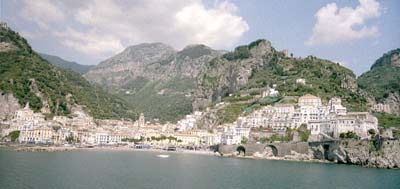
ABOVE: A panoramic view of Amalfi, Italy.
Its trading influence declined in the 12th Century, but the citizens of Amalfi found new outlets for their enterprising nature: They invented and perfected use of the magnetic compass in navigation, and they established a papermaking industry using technology borrowed from the Arabs. (The Museo della Carta on the via delle Cartiere offers a close-up look at Amalfi's papermaking heritage.) For today's tourists--and especially for those arriving by cruise ship--Amalfi's history is less important than its spectacular setting. Houses, churches, and vineyards spill down a mountainside toward the sea, where cruise ships anchor just beyond the tiny harbor and excursion boats seem to arrive and depart almost constantly from jetties along the waterfront.
I was still in a walking mood, so I returned to the waterfront and followed the eastbound road to the Torre di San Francisco (now the site of a restaurant) , which was a great spot for taking pictures of the harbor. I then walked a few meters downhill to a staircase that led up to a pretty little church, the Chiesa di San Antonio da Padova.
Shore excursions. Wind Surf offered two tours from Amalfi: a 3-1/2-hour trip to Ravello, perched high on a platrau overlooking the Amalfi Coast; and a 6-1/2-hour Pompeii and Sorrento tour that returned to the Wind Surf after the ship's afternoon crossing from Amalfi to Sorrento. Next page: Sorrento
Cathedral photo copyright © Pierrette Quertin. |
|
|
| Europe for Visitors - Home | | Contact information, disclosures, audience | Copyright © 1996-2024 Durant and Cheryl Imboden. All rights reserved. |

 During
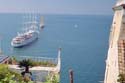
my cruise, the Wind Surf dropped anchor at 7 a.m. for a six-hour stay. Local
boats provided a frequent shuttle service between ship and shore.
During
my cruise, the Wind Surf dropped anchor at 7 a.m. for a six-hour stay. Local
boats provided a frequent shuttle service between ship and shore. 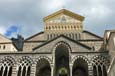 From
the tender landing on the waterfront, I explored the staircases and passageways
of the town center until the
From
the tender landing on the waterfront, I explored the staircases and passageways
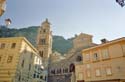
of the town center until the 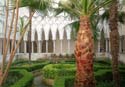 My
inexpensive ticket provided entry to the
My
inexpensive ticket provided entry to the 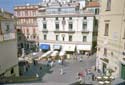 After
peeking inside the church, I struck uphill via the staircase and encountered a
construction crew that were using donkeys to bring materials up the stairs from
the main road. From there, I followed the Via Capo di Croce and the Via S.
Lorenzo del Piano to the Via Sopramuro, a staircase that led back to the
cathedral square in the center of town.
After
peeking inside the church, I struck uphill via the staircase and encountered a
construction crew that were using donkeys to bring materials up the stairs from
the main road. From there, I followed the Via Capo di Croce and the Via S.
Lorenzo del Piano to the Via Sopramuro, a staircase that led back to the
cathedral square in the center of town. 