| Munich Index | Germany Index |
 Save
on car rental with short-term leasing
Save
on car rental with short-term leasing
Save
on car rental with short-term leasing
|
|
Munich History and BackgroundFrom: Munich Travel Guide
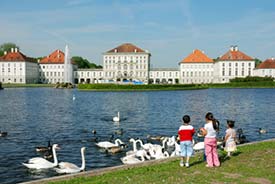
ABOVE: Schloss Nymphenburg became the summer palace of Bavaria's electors, kings, and dukes in 1675. Munich: a capsule historyMunich (in German, München) was born 850 years ago, when Henry the Lion--the Duke of Bavaria and Saxony--was on a development binge that led to the creation of Munich, Lübeck, Brunswick, and several other cities. In 1504, Munich become the capital of Bavaria; and by the mid-19th Century, it was a major city with an archbishop, a university, an opera house, palaces, and the other trappings that might be expected of a kingdom's royal seat.
For more historical background, see Wikipedia: Munich. Munich today
Next page: Sightseeing in Munich
Top photo copyright © Manfred Steinbach. |
|
| Germany for Visitors - Home | | Europe for Visitors - Home | | Contact information, disclosures, audience | Disclosure: Where hotel or other reservation links point to third-party booking sites, we may receive a small commission on transactions. This will not affect the rate you pay. Copyright © 1996-2026 Durant and Cheryl Imboden. All rights reserved. |
 Munich
gained notoriety in the 20th Century as the birthplace of the Nazi party, which
regarded the city as the "capital of the movement" from 1920 (when the party was
founded in the Sterneckerbräu beer hall) until the collapse of the Third Reich.
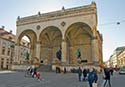
The party's "spiritual center" was the
Munich
gained notoriety in the 20th Century as the birthplace of the Nazi party, which
regarded the city as the "capital of the movement" from 1920 (when the party was
founded in the Sterneckerbräu beer hall) until the collapse of the Third Reich.
The party's "spiritual center" was the  Modern
Munich is a city of 1.35 million inhabitants in a metropolitan area with a
population of six million. It's one of Germany's most properous cities, and as
the capital of Bavaria (which has long been popular with American and British
tourists), it attracts more English-speaking visitors than any other German
city.
Modern
Munich is a city of 1.35 million inhabitants in a metropolitan area with a
population of six million. It's one of Germany's most properous cities, and as
the capital of Bavaria (which has long been popular with American and British
tourists), it attracts more English-speaking visitors than any other German
city.