|
Europe
> Money > Credit cards
Using Credit Cards in Europe
Tips and warnings for travelers
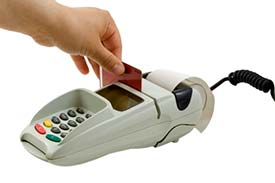
ABOVE: In many European businesses,
credit-card readers have keyboards for entering the PIN numbers used with "smart
cards." INSET
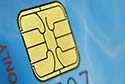
BELOW: In some countries, such as France, cards with embedded microchips are
required by ticket machines, self-service fuel pumps, and other newer vending
devices.
By
Durant Imboden
Credit cards are
used widely in Europe, but if you're a visitor from abroad, read these tips and
warnings before arriving in a European country with nothing but plastic in your
pocket:
-
Some businesses say "no" or set minimums.
Street vendors,
hole-in-the-wall cafés and restaurants, and tiny
old-fashioned shops don't always accept Visa, MasterCard, or the local
equivalent. Also, some businesses won't accept cards for smaller purchases
(e.g., under 20 euros). To avoid getting caught short, carry at least some local
currency.
-
International brands and networks work best. Just about
every business that does accept credit cards will take your Visa,
MasterCard, or EuroCard, and businesses that cater to well-heeled tourists and
business travelers usually honor American Express. (Diners Club may also be
accepted; Discover is a U.S.-only brand, although that could change with
Discover's acquisition of Diners Club Europe.)
-
 Microchips
can prevent--or cause--headaches. "Smart cards," also known as "chip and
PIN cards," are increasingly commonplace in Europe. Such cards incorporate
microchips that can be programmed with user information and security data.
Europeans normally enter a four-digit Personal Identification Number, or
PIN, when making a purchase. This makes it tougher for thieves to use stolen
cards or card numbers. Microchips
can prevent--or cause--headaches. "Smart cards," also known as "chip and
PIN cards," are increasingly commonplace in Europe. Such cards incorporate
microchips that can be programmed with user information and security data.
Europeans normally enter a four-digit Personal Identification Number, or
PIN, when making a purchase. This makes it tougher for thieves to use stolen
cards or card numbers.
Note:
Most American credit cards
still lack PINs, even if they have embedded chips. If you're visiting from
the U.S. and using a credit card (as opposed to a debit card), you'll
typically be asked for a signature unless you're using a vending machine.
-
Watch for hidden fees. Increasingly, banks and
credit-card companies are charging hidden "foreign transaction fees" of 2 to 5
percent on purchases outside the cardholder's home country. Often, such fees are
charged even on transactions in the cardholder's own currency. See our
Credit-Card Surcharges article for more
information (including how to avoid such fees).
-
Avoid cash advances. Instead of getting cash with your
credit card (and paying fees plus interest for the convenience), use your bank
ATM card--but watch out for the
exorbitant ATM conversion fees that many
banks are charging these days.
-
Call your credit-card company before you travel. In the
U.S., especially, xenophobic banks and credit-card companies may reject overseas
transactions unless they've been notified of your trip ahead of time. (As long
as you're calling, ask about "foreign transaction fees" so you'll know if it's
time to take your credit-card business elsewhere.)
-
Carry a backup card, and bring photocopies
of cards with you. If
you own more than one credit card, carry a backup card just in case your primary
card doesn't work. If you can carry the backup card in a different place from
your main card, such as a hidden "neck safe," so much the better.
Also, it's wise to make photocopies of your cards (including
the customer-service phone numbers on the back) so you can report any theft or
loss of your card immediately. Keep the paper copies separate from your cards,
and if you're traveling with a companion, let the other person have a copy of
your card information.
Finally, and most important:
-
Guard your cards! Don't carry credit cards in a backpack,
a carry-on bag, or a suitcase, and don't keep your wallet in a hip pocket or a
belt pouch. Pickpockets and purse snatchers know that tourists are often
careless, so they'll be watching you.
For more advice
about money and travel, click the navigation links below.
About the author:
 Durant Imboden
is a professional travel writer, book author, and editor who focuses on European
cities and transportation. Durant Imboden
is a professional travel writer, book author, and editor who focuses on European
cities and transportation.
After 4-1/2 years of covering European travel topics for About.com, Durant and
Cheryl Imboden co-founded Europe for Visitors in
2001. The
site has earned "Best of the Web" honors from Forbes and The
Washington Post.
For more information, see
About
Europe for Visitors,
press clippings, and
reader
testimonials.
Top photo copyright © Midhat Bakar.
Inset photo copyright © Mats Tooming.
| |
|

 "Best
of the Web" - Washington Post
"Best
of the Web" - Washington Post