| Home | Main Menu |
 Save
on car rental with short-term leasing
Save
on car rental with short-term leasing
Save
on car rental with short-term leasing
|
|
The Euro
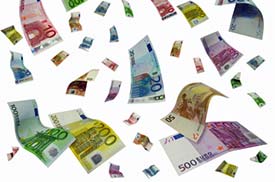
ABOVE: Euro banknotes.
Q. What is the euro? It's a common currency that has replaced 16 national currencies in Western Europe--among them, the French franc, the German Mark, the Dutch guilder, and the Italian lira. The euro is divided into 100 cents. Prices and other amounts are typically quoted with the symbol € or the abbreviation EUR. Q. Which countries are participating? Initially, 11 countries replaced their currencies with the euro. The euro's founding member states included:
Since the currency's introduction, more countries have joined the euro zone:
Other countries that use the euro as currency (but aren't members of the euro zone) include Andorra, Monaco, San Marino, Vatican City, Kosovo, and Montenegro. As you can see from the lists, many European nations have chosen not to support the euro: among them, Britain, Switzerland, and all but one of the Scandinavian countries. Others haven't met the economic requirements for participation in the common currency.
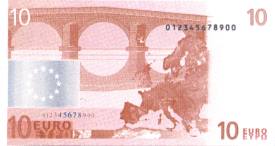
ABOVE: Front and back of a €10 banknote. BELOW: Front of €1 coin, and back of a €1 coin from the Zecca di Stato, the Italian national mint. (Coins have a standard "heads" side, but the "tails" side differs from country to country. All national versions can be used interchangeably throughout the euro zone.)
Plural: "Euro" vs. "euros"You might expect a common currency to have a common spelling, but no such luck. An EU dossier recommends using "euro" as the plural form in English, but the currency's official Web site employs the "euros" form, and so most British newspapers. Web linksEurope for Visitors
Currency Converter Wikipedia: Euro EuroTracer
Microsoft
Typography: The euro currency symbol About the author:
After 4-1/2 years of covering European travel topics for About.com, Durant and Cheryl Imboden co-founded Europe for Visitors in 2001. The site has earned "Best of the Web" honors from Forbes and The Washington Post. For more information, see About Europe for Visitors, press clippings, and reader testimonials. Photo copyright © Slavoljub Pantelic.
|
|
|
| Europe for Visitors - Home | | About us | | Press clippings | | Testimonials | Disclosure: Where hotel or other reservation links point to third-party booking sites, we may receive a small commission on transactions. This will not affect the rate you pay. Copyright © 1996-2026 Durant and Cheryl Imboden. All rights reserved. |