| Home | Main Menu |
 Save
on car rental with short-term leasing
Save
on car rental with short-term leasing
Save
on car rental with short-term leasing
|
|
Traveler's Checks(Travelers Cheques)
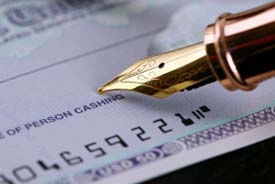
Not long ago, a reader asked: "Is anybody still using traveler's checks?" Good question. Today's conventional wisdom is that ATMs have made it unnecessary to carry large amounts of cash or cash substitutes. Automated Teller Machines also give a better conversion rate than banks and exchange counters do (or so the argument goes). And with an ATM card, you don't have to pay a fee of 1% or more for the safety of not carrying cash. If only the answer were so simple! In reality, using ATMs can be almost as expensive as using traveler's checks at least some of the time, thanks to ATM conversion fees (see our article) and transaction fees that can add 5% to the cost of a modest cash withdrawal. The real benefit of using an ATM is convenience: Instead of waiting in line at an exchange window, you simply insert your card, enter your PIN number, and get your cash. Still, there are times when it could make sense to carry traveler's checks (or "cheques," to use the spelling favored by our British readers and some vendors). For example:
Caution: There are risks in relying excessively on traveler's checks. In the 21st Century, not all businesses take travelers' checks, and younger clerks may not even know what they are. Our recommendation: If you insist on carrying travelers' checks, use them as a supplement to an ATM card and credit cards, and be prepared to change them in banks if local businesses refuse to accept them. (For what it's worth, we haven't used travelers' checks ourselves since the early 1990s.) What kind of traveler's checks to buy
Where to buy traveler's cheques Banks and credit unions often sell traveler's checks, as do the AAA, the CAA, and many other national automobile associations. The traditional purchase fee for travellers cheques is 1%, although some agencies charge more. Shop around before buying; your bank or credit union may offer free check purchases with certain types of accounts, and members of automobile associations are usually exempt from purchase fees. Caution: Avoid prepaid travel cash cards, which are like a debit-card version of traveler's checks, unless you're willing to tolerate mind-boggling currency-exchange fees. See our Prepaid Travel Cash Cards article for details. Security considerations Traveler's checks are advertised as being "safer than cash," because the issuers promise to replace them if they're lost or stolen. However, the reality is often more harsh: If the issuer decides that you've been negligent, it may refuse to pay up. In practical terms, this means you should handle travellers cheques as if they were cash. You should also keep copies of your receipt and transaction record in two or more places, to be sure of having a record if you need to claim a refund. About the author:
After 4-1/2 years of covering European travel topics for About.com, Durant and Cheryl Imboden co-founded Europe for Visitors in 2001. The site has earned "Best of the Web" honors from Forbes and The Washington Post. For more information, see About Europe for Visitors, press clippings, and reader testimonials. Photo copyright © Stefan Klein. |
|
|
| Europe for Visitors - Home | | About us | | Press clippings | | Testimonials | Disclosure: Where hotel or other reservation links point to third-party booking sites, we may receive a small commission on transactions. This will not affect the rate you pay. Copyright © 1996-2026 Durant and Cheryl Imboden. All rights reserved. |